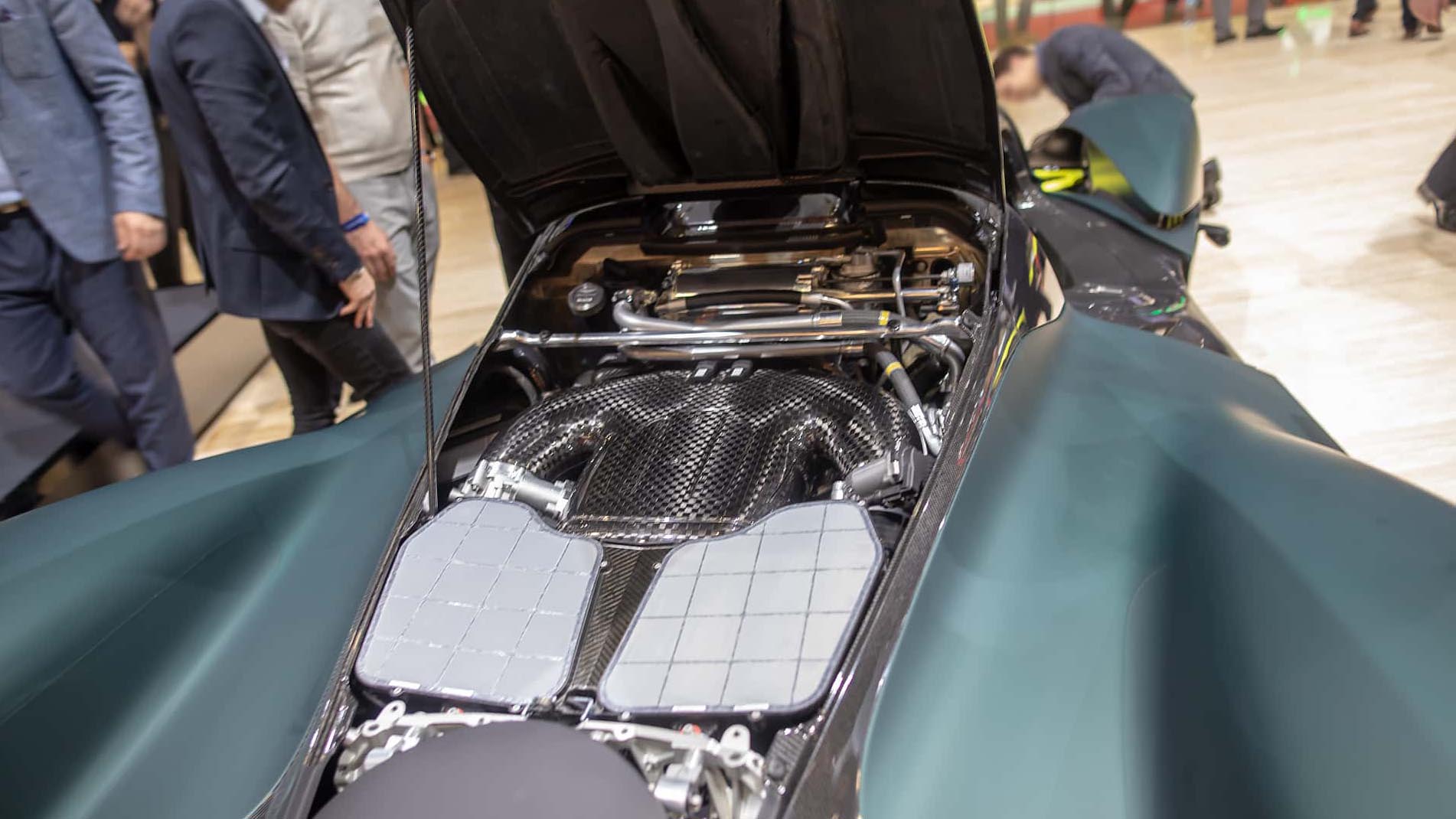
Having been involved intermittently at the start of the Aston Martin Valkyrie project we have since been further involved in getting the unique supercar developed and into production. Support with the cars hydraulic systems was required as part of this development work which we have played an integral part in.
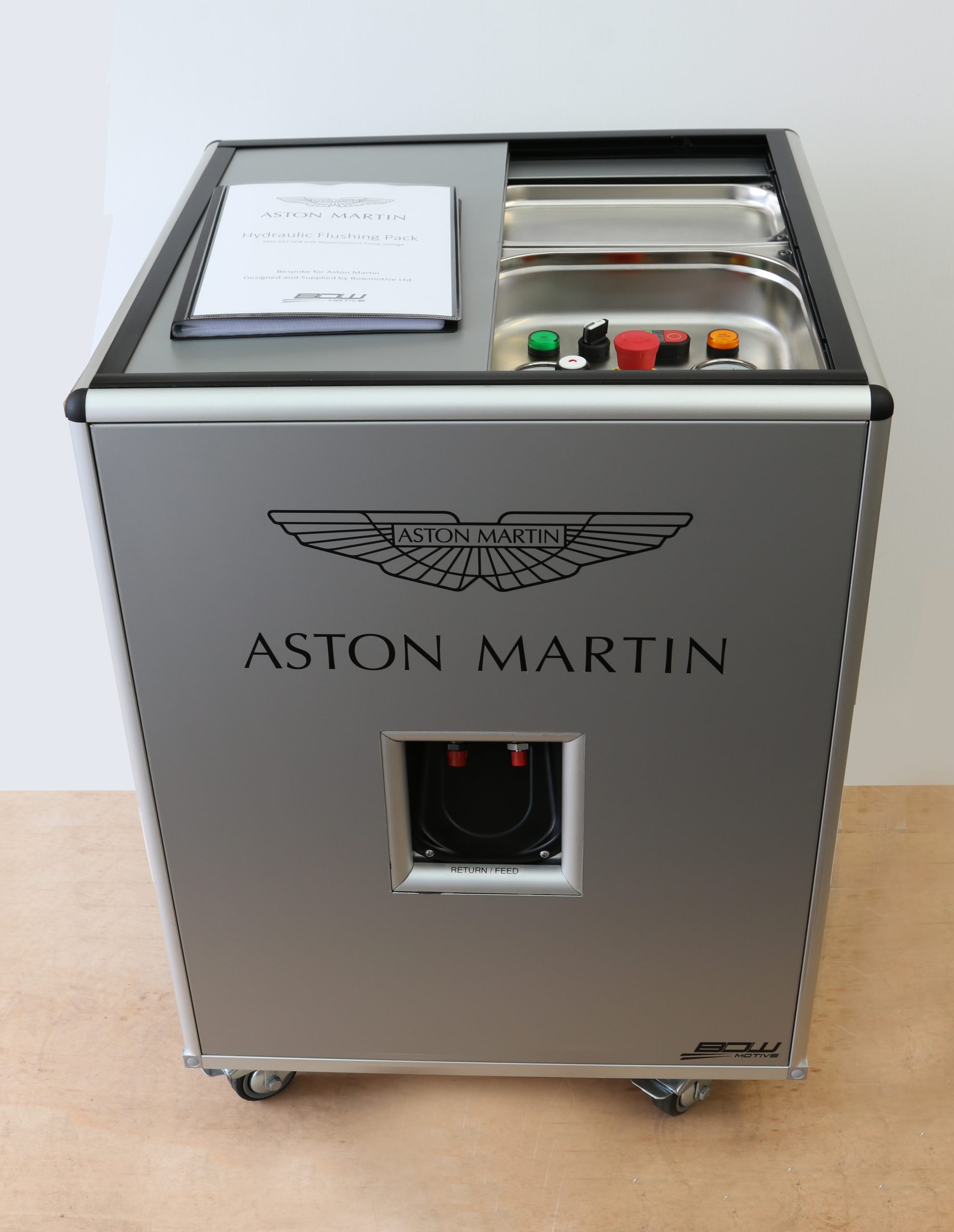
Our expertise has been used to educate a large number of development engineers and technicians in the art of hydraulics at Aston Martin. We have also designed and developed specialist equipment whilst identifying an opportunity to improve set up and the time frame of production. Our technology offering included the end of line sign off of complex hydraulic systems which eliminated the need to run the high performance engine as part of a system check. We designed and manufactured an off car hydraulic pack especially for use in Aston Martins Valkyrie development and test area where access to electrical power supply is limited to 13-16 amp 240V.
The unit is simple to use with little training or by using the step by step guide supplied with the unit. The single box contains everything needed in one place and the rig carries the stowed electrical cable and umbilical hose to quickly get operational. The design has clear easy to read and easy to operate controls with many built in safety features to warn when filters are blocking, low fluid levels are present or when fluid is getting too hot. Fine fluid levels can be set with a bespoke calibrated hand pump stored in the rig.
The Valkyrie hypercar has more hydraulic systems than almost any road car in the world, so there is a significant need to check, calibrate and set up sensors and systems that enable fault diagnosis and exercise actuators. The need for ultra clean fluid and consistent hydraulic power is essential in meeting the demands of the vehicle. The rig is similar to those supported for running F1 cars with many of the operating conditions being common to high performance race and hypercars.